How should hotels divide housekeeping tips?
·Wootera
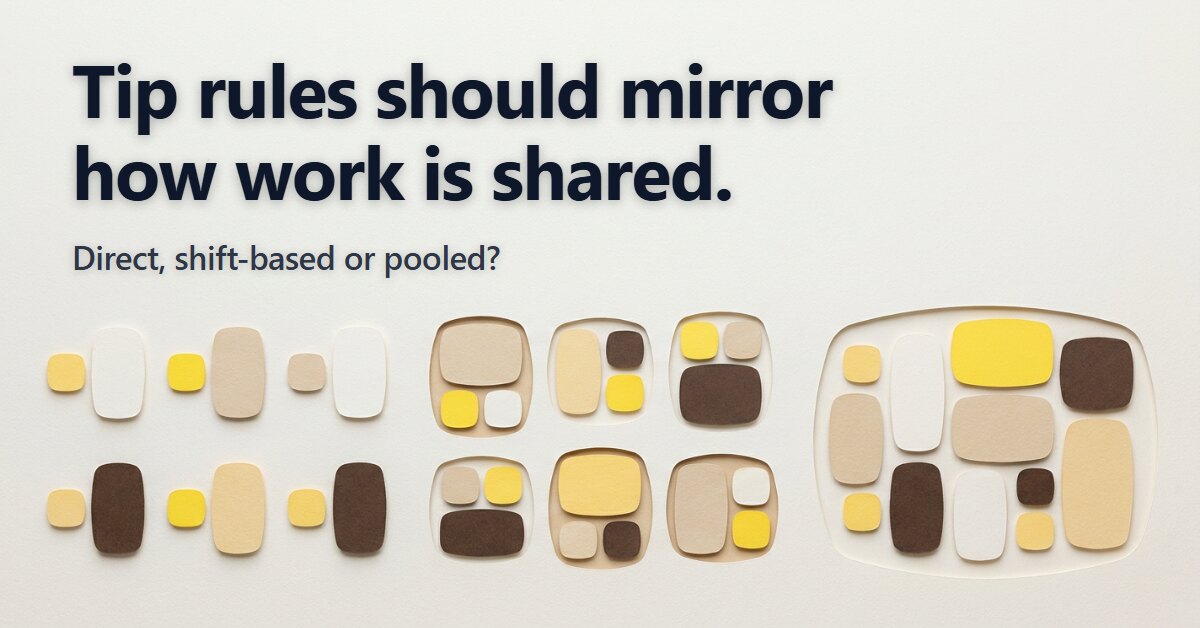
Choose a model that reflects how your housekeeping work is actually shared. Direct retention can work when one employee is clearly responsible for the service. Shift-based sharing may suit a team working together during a defined shift. A wider pool may be more appropriate when several shifts or support roles contribute.
No model is automatically the fairest. Whatever you choose, the written policy should state which tips it covers, who participates, how each share is calculated, how handovers are handled and when the money is distributed.
Separate the guest's intention from the hotel's allocation rule
Two different questions often get combined:
- Whom did the guest intend to tip?
- How does the hotel distribute that tip under its policy?
A named envelope handed directly to a room attendant gives a clearer indication of intent than unmarked cash left in a room. Even then, you need a verification rule. The person who receives or finds an envelope may not be the person named on it. The attendant cleaning a room at checkout may not have serviced it earlier in the stay.
The allocation rule is a separate operational decision. It determines whether the tip goes to one employee, a defined shift or a wider group.
Your policy should distinguish between:
- tips naming a specific employee
- unnamed cash left in a room
- digital tips
- tips given to reception or another employee for housekeeping
Without these distinctions, distribution may depend on who happens to find or receive the tip.
Compare the three tip distribution models
Direct retention assigns a tip to the employee connected with a particular room or service. It is easiest to apply when one attendant completes the work and room assignments are recorded. It becomes less clear when several employees service the room or the tip appears after a shift handover.
Shift-based sharing combines eligible tips from a defined shift and divides them among eligible members of that shift. Shares may be equal, based on hours worked or calculated using another documented factor.
A pooled model collects eligible tips over a stated period and distributes them among specified employees or roles. Unlike a shift-based model, the pool can cover several shifts and include support roles that do not enter the tipped room.
| Situation | Direct retention | Shift-based sharing | Pooled model |
|---|---|---|---|
| Several employees service one room | Requires a rule for selecting one recipient or dividing the tip. | Includes eligible members of the assigned shift. | Includes eligible participants in the pooling period. |
| Room passes between shifts | Requires a rule based on recorded work, not discovery time alone. | Assigns the tip to one shift or divides it between shifts. | Can include both shifts if both are eligible. |
| Public-area work | Usually excluded unless the tip can be directly attributed. | Included only when the role belongs to the defined shift group. | Included when the role is expressly eligible. |
| Less visible work | Usually excludes laundry, restocking and inspection. | Can include listed roles supporting the shift. | Can include support roles across the pooling period. |
| Records needed | Room assignments and service records. | Shift rosters, eligible hours and tips assigned to each shift. | Included tips, eligible participants and the complete calculation. |
| Employee clarity | Strong when one person clearly owns the assignment. | Depends on consistent shift boundaries and calculations. | Depends on whether employees can understand and verify the pool. |
Choose the model based on how the work is organised
Use three questions to guide the decision.
- Can the service be reliably attributed to one employee? Direct retention may fit. You will still need exceptions for shared rooms, multi-day stays and shift handovers.
- Is the service mainly delivered by a team working during one shift? Shift-based sharing may fit. Define the shift, eligible roles and whether hours worked affect each share.
- Does the service depend on several shifts or support roles? A pool may fit. Set the pooling period and name every eligible role.
You can also combine models. For example, a clearly named tip could go to the verified recipient, while unnamed room tips enter a shift-based or pooled calculation.
A combined policy is not automatically fairer. It adds a classification decision. Employees need to know how each tip is classified and which rule then applies.
Test the rule against difficult cases
A policy that looks clear on paper can still produce conflicting answers during a handover. Before implementation, test it against completed shifts and real room assignments. Do not distribute money based on this test.
Include cases such as:
- one attendant strips the room, another completes it and a runner delivers supplies later
- different attendants service a room during a multi-day stay, with a tip appearing only at checkout
- one shift completes most of the work and another handles the final request
- public-area attendants, linen staff or inspectors contribute without entering the tipped room
- an unnamed tip is handed to reception instead of being left in the room
Ask two managers to calculate each allocation independently using the same written policy and records. If they reach different answers, identify the exact decision that caused the difference.
The disagreement may reveal that the policy does not define which shift owns a tip, what counts as a documented contribution or how an unnamed tip should be classified. Revise that point and repeat the test. The same facts should consistently produce the same allocation.
Put the complete rule in writing
An employee or manager should be able to reproduce an allocation without relying on memory or informal custom. The written policy should state:
- which tip sources are covered
- how a named or intended recipient is verified
- which employees and roles are eligible
- how shared rooms, multi-day stays and shift handovers are treated
- whether public-area, linen, restocking and inspection roles participate
- how shares are calculated, including any use of hours, roles or recorded contributions
- when each shift or pooling period begins and ends
- when and how tips are distributed
- which records are kept and who can review them
- how employees can report an error or dispute an allocation
- what happens when a tip cannot be attributed under the normal rule
Employment, tax, payroll and recordkeeping requirements vary by jurisdiction. Local rules may affect tip ownership, eligible participants, deductions, employee consent, reporting and payment methods. Have a qualified local adviser review the proposed policy before implementation.
Frequently asked questions
What should happen when a guest names a specific housekeeping employee?
The policy should explain how the recipient is verified and whether a directed tip is treated differently from an unnamed tip. Verification can use the name provided by the guest and the hotel's assignment records. It should not depend only on who found or received the money.
Should a shift-based split account for hours worked?
It can. Equal and hours-based splits reward participation differently. Choose one method, document it and retain the records needed to reproduce the calculation. Employees should be able to check the hours or other factors used.
Can public-area attendants and laundry staff join a tip pool?
They can participate when the written policy expressly includes their roles and applicable local rules permit it. Avoid broad descriptions such as "the housekeeping team". Naming each eligible role makes participation easier to understand and verify.
Who should resolve a disputed tip allocation?
Assign responsibility to a specific role and provide a simple review process. The reviewer should use room assignments, shift rosters, service records and tip records. The decision should not be based solely on who found or reported the tip.